
🌿 The Origin of “Shinroku” — When Gods Rode Deer to Nara
In Japan, the term “Shinroku (神鹿)”, meaning Divine Deer, refers to sacred deer believed to serve as messengers of the gods.
This belief dates back to the Nara period (8th century), when Kasuga Taisha Shrine was founded in 768 AD.
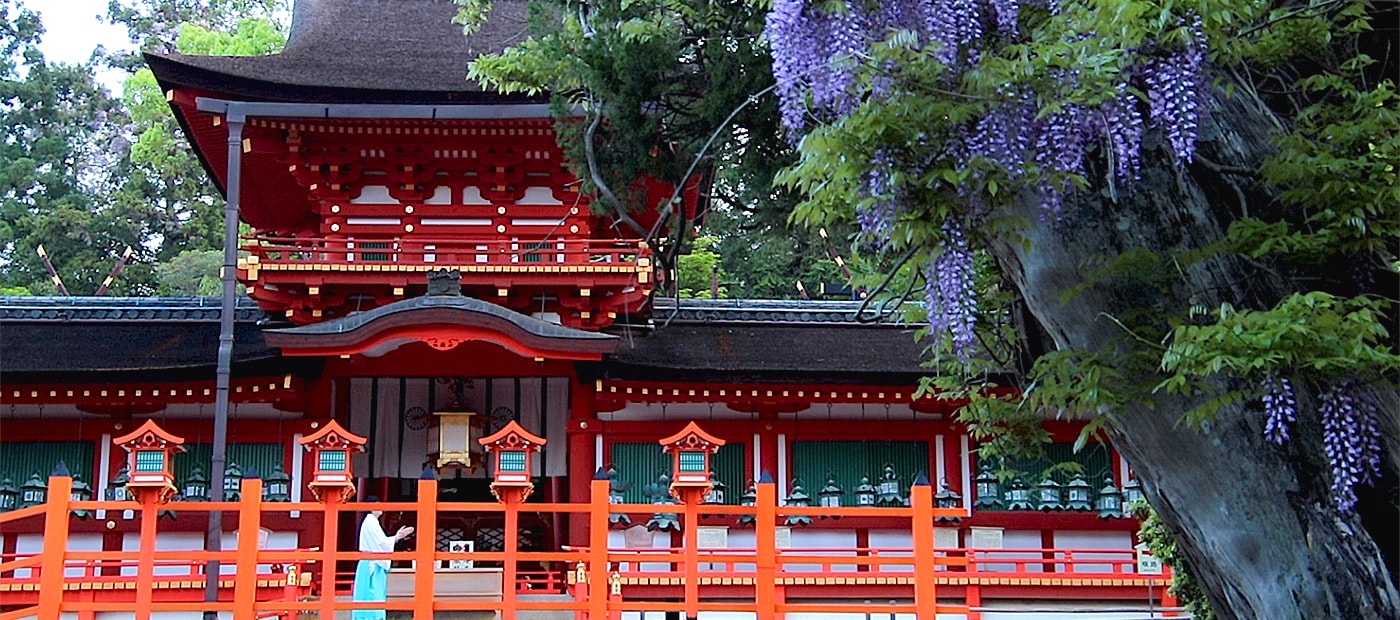
Kasuga Taisha, set against the lush forests of Mount Kasuga in Nara Park, is part of the UNESCO World Heritage Site “Historic Monuments of Ancient Nara.”
It was built to enshrine the tutelary deities of the Fujiwara clan, powerful nobles who shaped early Japanese politics.
According to legend, when the shrine was founded, the deity Takemikazuchi-no-Mikoto rode from Kashima Shrine in modern-day Ibaraki Prefecture to Nara—on the back of a white deer.
This story is famously depicted in the 13th-century national treasure “Kasuga Gongen Genki E.”
Since then, deer have been revered as messengers of the gods, and the people of Nara have protected them as sacred beings—the living symbols of Kasuga faith.
🏯 Nara’s Deer — Protected as a National Treasure
Around 1,300 wild deer roam freely around Nara Park today.
They were officially designated as a National Natural Monument in 1957 under the title “The Deer of Nara.”
Historically, harming or killing a deer was considered a capital offense—a crime punishable by death—because the animals were seen as divine emissaries.
This long tradition of protection reflects something uniquely Japanese:
a worldview where humans, nature, and the divine coexist in harmony—an expression of Shinto animism that continues even now.
🕊️ Deer as Listeners of the Divine — The “Animals of Prayer”
In ancient Japan, deer were not only sacred; they were seen as mediums between gods and humans.
Archaeological evidence shows that deer bones and antlers were used in divination rituals.
Influenced by ancient Chinese oracle bone practices, the Japanese performed “Rokkotsu-ura” (鹿骨占)—divination by deer bone.
Priests would heat the bone until it cracked, then interpret the fractures as messages from the gods.

For centuries, deer bones and antlers served as “spiritual antennas”—tools for communicating divine will, asking for good harvests, or predicting weather patterns.
In this way, deer became sacred partners in the act of prayer itself.
🌸 The Divine Deer and Kasuga Faith — Walking Between Gods and Humans
At Kasuga Taisha Shrine today, deer still wander peacefully around the shrine grounds.
The famous “deer crackers” (shika senbei) sold in Nara actually trace their origins to ancient offerings made to the gods.
The deer’s calm approach toward humans is more than a tourist charm—
it’s a symbol of communication between the human and the divine realms.

TR15336300101 – 投稿者自身による著作物, CC 表示-継承 4.0, リンクによる
Kasuga’s crest, the hanging wisteria (sagari-fuji), represents both the Fujiwara family and the sacred deer—its flowing lines resembling deer antlers intertwined with divine grace.
🌏 Protecting the Divine Deer — Modern Faith Through Coexistence
Even today, the belief that “deer are messengers of the gods” remains strong among locals.
The Nara Deer Preservation Foundation continues to care for these animals, conducting ecological research, traffic safety measures, and public education.
However, coexistence is not without challenges—
about 100 deer are killed each year in traffic accidents, and the population faces issues such as feeding imbalance and habitat degradation due to mass tourism.
Still, the people of Nara persist in their devotion, protecting the deer as living bridges between humanity and divinity.
✨ Conclusion — The Living Prayer of Japan
The deer of Nara are not mere symbols of tourism.
They are living embodiments of Japan’s ancient spirituality—creatures that have walked between the worlds of gods and men for over a thousand years.
To look into the eyes of a Nara deer is to glimpse the heart of Japanese faith itself:
a quiet reverence for life, nature, and the unseen spirits that dwell among us.
- 🌿 The Origin of “Shinroku” — When Gods Rode Deer to Nara
- 🏯 Nara’s Deer — Protected as a National Treasure
- 🕊️ Deer as Listeners of the Divine — The “Animals of Prayer”
- 🌸 The Divine Deer and Kasuga Faith — Walking Between Gods and Humans
- 🌏 Protecting the Divine Deer — Modern Faith Through Coexistence
- ✨ Conclusion — The Living Prayer of Japan
- 📖 You May Also Like
📖 You May Also Like


あにまるまにあ いぬまにあ くままにあ とりまにあ ねこまにあ イルカ ウマ オオカミ カラス ジャーマン・シェパード ゾウ トラ トリビア ライオン ランキング 伝説の生き物 動物 動物のIQ 動物のトリビア 動物のランキング 動物の不思議 動物の歴史 動物の生態 動物の知能 動物の研究 動物の科学 動物の習性 動物の能力 動物の行動 動物の視力 動物の論文 動物の雑学 大型犬 熊 熊の生態 犬 犬の生態 犬の能力 猫 猫の不思議 猫の生態 神獣・伝説・神話 警察犬 雑学 鳥類


コメント